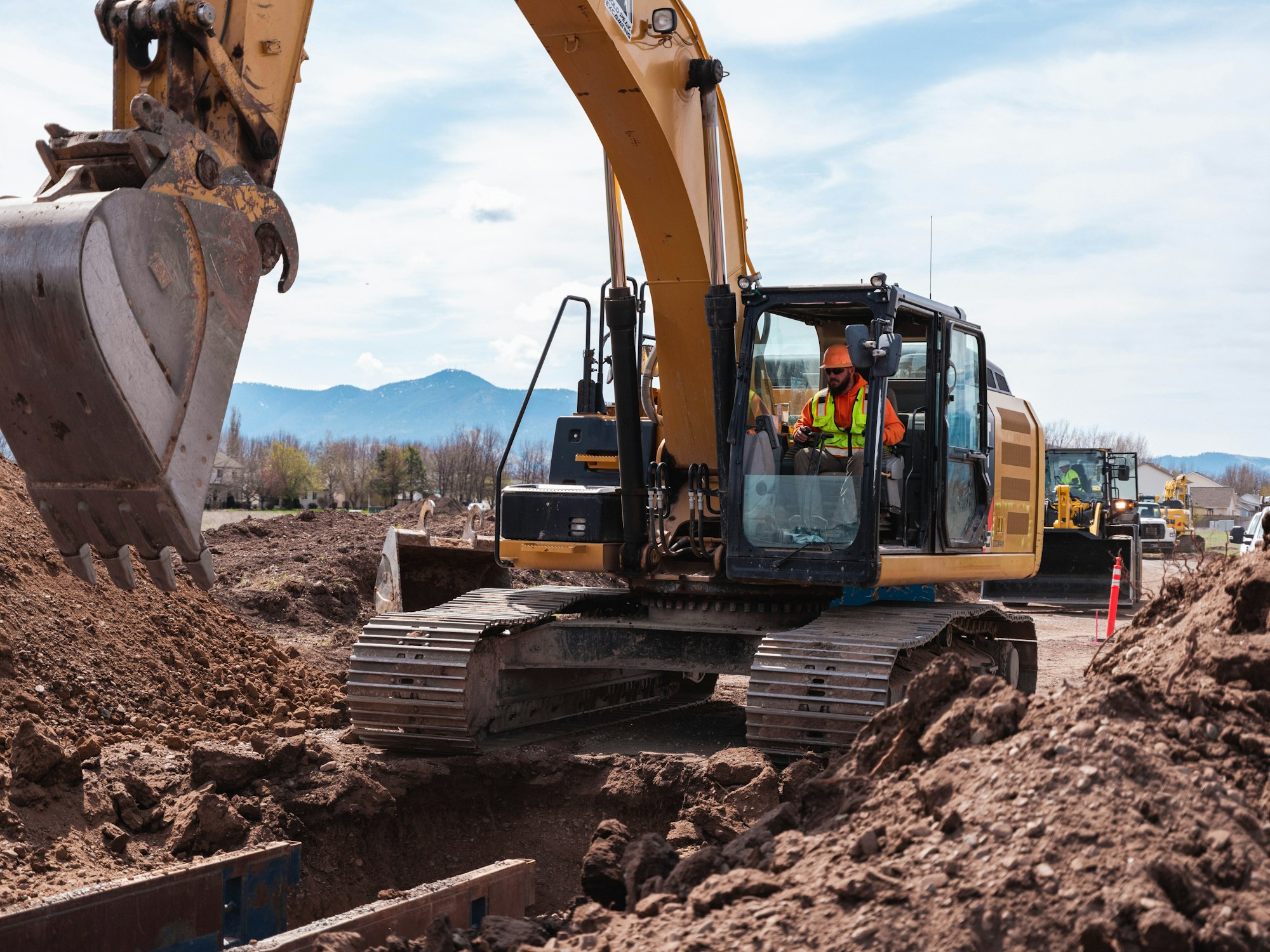
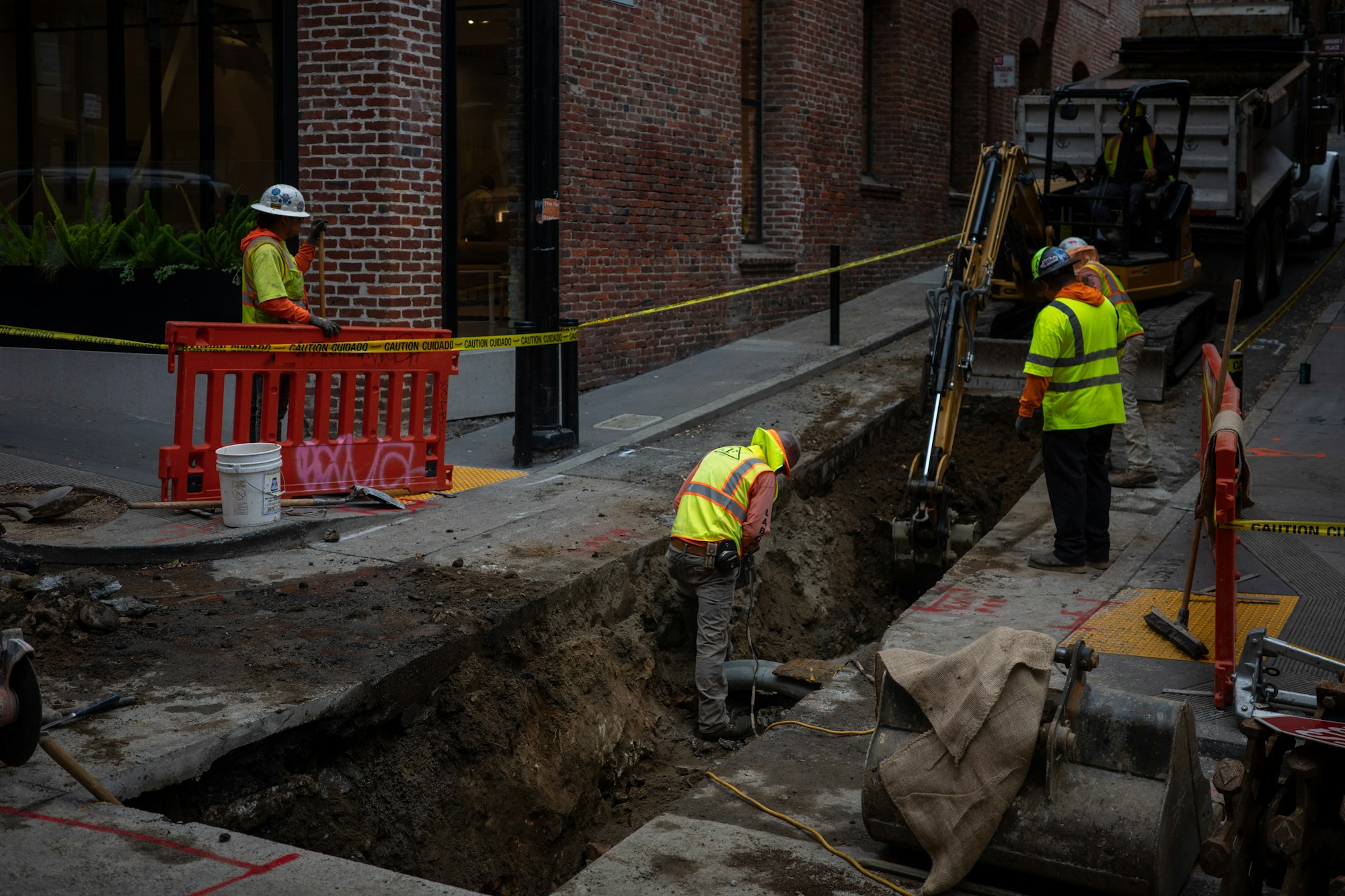
A utility trenching contractor in Pennsylvania digs, beds, lays and backfills the trenches that carry water, sewer, electric, gas and communications lines from the street or the source to your building. Good trenching is mostly invisible once it is done, and that is the point. The pipe or conduit sits at the right depth, on the right bedding, separated from the other utilities, inspected before it is covered, and backfilled so the ground above it does not settle into a ditch.
I am John "JT" Minarik, Construction Manager at Building Contractors United, and I have been running equipment and crews on site work since 2009. This guide is for property owners, builders and business owners who need utilities run to a new home, an addition, a garage, a commercial building or a lot that is being developed. It explains what happens in the trench and why each step matters, so you can ask the right questions before anyone starts digging.
What a utility trenching contractor in Pennsylvania does
A utility trenching contractor handles the excavation and earthwork side of getting utilities to a structure. That includes locating existing lines, planning the route, digging the trench, protecting the crew, preparing the bedding, setting or helping set the pipe and conduit, coordinating inspections and backfilling in layers. On most of our jobs we are also the site contractor for the rest of the work, so the trenching ties into the grading, foundation and driveway plans instead of fighting them.
What we do not do is take the place of the licensed trades and the utility companies. Plumbing connections are made by a licensed plumber that we coordinate. The electric utility decides how service is delivered to its meter. Public water and sewer authorities set their own rules for taps and laterals. Our job is to make the trench right for all of them and keep the schedule moving between them.
Call PA One Call before any digging
Pennsylvania law requires anyone excavating to notify PA One Call before digging, and the call has to be made at least three business days ahead of the work. PA One Call then notifies the member utilities, which mark the approximate location of their lines with paint and flags. That requirement applies to homeowners and contractors alike.
A few things owners should understand about the markings.
Marks show approximate locations
Utility marks show where a line is believed to be, within a tolerance zone on either side of the mark. Inside that zone, a careful contractor digs by hand or with vacuum excavation to expose the line before running a bucket near it. On older properties in Butler and Allegheny County, it is not unusual to find a line that is shallower or slightly off from where it was marked.
Private lines are not marked by utilities
PA One Call members mark their own facilities, which generally run up to the meter or the property line. Lines the owner installed are usually not marked. That includes the electric run from a house to a detached garage, a water line to a barn, a septic line, a propane line from a tank, irrigation, and low-voltage cable to a gate or lights. If you know about any private lines, tell your contractor and show them where you think they run. If the property has a history of work nobody documented, a private locating service can help.
Marks expire and get destroyed
Marks fade, flags get pulled, and rain and equipment wipe out paint. Tickets also have a limited life. If the job is delayed or the marks are gone, a new request is needed. We keep the ticket number on site and do not dig on old marks.
How deep do utility trenches have to be?
Trench depth depends on what is going in the trench, the code that applies, and the utility's own standards. There is no single number that covers everything, so treat the following as the logic behind the depths you will hear, and confirm the specific requirement with your township, the utility or the design engineer.
Water lines
Water lines need to be below frost depth so they do not freeze. In Western Pennsylvania that depth is set by the local code official, and public water authorities often require a minimum cover over the service line. On a sloped lot, the trench depth has to be measured from the finished grade, not the existing grade, which is why we look at the grading plan before we dig a water line on a hillside.
Sewer laterals
Sewer depth is driven by slope. A gravity sewer lateral has to fall continuously from the building to the main, at a minimum slope set by the plumbing code and the sewer authority. That means the depth at the house is fixed by the depth at the main, the distance between them, and the required fall. If the numbers do not work, the building may need an ejector pump. We check this early, because finding out after the foundation is poured is expensive.
Electric and communications
Underground electric service and conduit have minimum cover requirements that depend on the voltage, the type of conduit or cable, and whether the run is under a driveway or yard. The electric utility sets its own standards for the primary and service lines it owns, and the electrical code covers the owner's side. Communications lines have their own requirements from the provider. On many of our jobs, electric and communications conduits share a trench with a required spacing between them.
Bedding, backfill and compaction
Bedding is the material directly under and around the pipe, and it matters as much as depth. Pipe sitting on rock or on soft, uneven clay can crack, sag or separate at the joints. Most specifications call for a bed of clean stone or sand under the pipe, material placed and compacted around it, and a layer of select fill over the top before the general backfill goes in.
The soil in our area makes this more important. Most of Butler, Allegheny and Beaver Counties is clay over shale. Shale breaks into sharp, flat pieces that should not sit against plastic pipe. Clay holds water, can turn soft in a wet trench, and shrinks and swells with moisture. On many jobs we haul the trench spoil away and bring in proper bedding stone rather than trying to reuse what came out.
Backfill goes in lifts, compacted as it goes, especially under driveways, parking areas, slabs and sidewalks. A trench that is dumped full and bucket-tamped will settle, sometimes months later, and leave a dip across the yard or a crack across the driveway. Warning tape is placed above the line during backfill so the next person to dig there sees it before they hit the pipe, and nonmetallic pipe usually gets a tracer wire so it can be located later.
Separation between water, sewer and electric
Utilities need separation from one another, both side to side and above and below. The most important rule is keeping drinking water lines away from sewer lines, so a leak in the sewer cannot contaminate the water supply. Plumbing codes and water and sewer authorities set the required distances and the conditions under which the lines can share a trench or cross. Where a water line has to cross a sewer, the water line generally goes above, with specific clearances and sometimes sleeved or special pipe.
Electric and gas also need separation from each other and from water and sewer. Some utilities allow joint trenches with set spacing, and some do not. Because these rules come from several sources at once, the code, the plumbing inspector, the water authority, the sewer authority and the electric and gas companies, we lay out the route on paper with every line on it before the first bucket goes in the ground. Confirm the exact separation requirements for your project with your township and each utility.
Trench safety and why it affects the plan
Trench safety is not optional, and it shapes how a trench is dug. Federal OSHA rules require a protective system, such as sloping, benching, shoring or a trench box, for trenches 5 feet deep or more unless the trench is entirely in stable rock. Spoil piles must be kept back from the edge, and workers need a safe way in and out of deeper trenches.
For an owner, this means a deep trench takes more room than you might expect. Sloping the sides back in clay can make the top of the trench several times wider than the bottom. If that is not possible because of a foundation, a property line or another utility, a trench box or shoring is used. That affects equipment, access and how much of your yard or lot is disturbed. A contractor who plans for it up front will not surprise you with a wider dig.
Inspections and utility coordination
Most utility trenches need an inspection before they are covered, and the schedule depends on which authority has jurisdiction. Here is the general order we follow on a typical job, though every project is a little different.
1. Confirm the design and approvals. That includes the site plan, the utility applications, any tap or connection permits, and the township building permit.
2. Place the PA One Call request and wait for marks.
3. Expose existing lines by hand or vacuum where the new trench crosses or runs near them.
4. Dig, place bedding and set pipe and conduit, with the licensed plumber or electrician making their connections.
5. Call for inspection. The township inspector, the water or sewer authority, or the electric utility may each need to see the work before it is covered.
6. Backfill in compacted lifts with warning tape and tracer wire, then restore the surface.
The biggest schedule risk is usually waiting on a utility. Electric service design, water and sewer tap approvals and inspections all run on the utility's calendar, not ours. We start those applications as early as possible and give you a realistic schedule with your estimate. For larger sites that disturb more ground, the earthwork may also be covered by an erosion and sediment control plan reviewed by the Butler County Conservation District under PA DEP rules, and the trenching has to follow that plan.
From the field: common trenching problems we see
Most trenching problems we are called to fix come from the same handful of shortcuts. These are the ones I see most often in Butler County and the North Hills.
Shallow water lines that freeze in the first hard winter. Sewer laterals with a belly, a low spot where solids collect, because the bedding was not graded. Electric run in a trench with no conduit, or with conduit that was crushed by rock in the backfill. Driveways that crack along a line a year after the job because the trench was never compacted. Private lines cut because nobody asked the owner where they ran. Every one of these is cheaper to prevent than to repair, and every one of them comes down to doing each step in order without rushing the backfill.
On hillside lots, we also watch for water. A trench running down a slope can turn into a French drain, carrying groundwater along the bedding stone straight toward a foundation. Where that is a risk, we add trench plugs or change the route. That kind of detail is the reason John Minarik walks every site before we price it.
Frequently asked questions
Do I need to call PA One Call if I am only digging on my own property?
Yes. Pennsylvania law requires notice to PA One Call before excavation, including on private property, at least three business days in advance. Utility lines often run through private yards to reach the meter, and hitting one can be dangerous and expensive.
Can water and sewer go in the same trench?
Sometimes, under specific conditions on separation and placement set by the plumbing code and the local water and sewer authorities. Many authorities prefer or require separate trenches. Check with your township and authority, and let your contractor lay out the route so it meets their rules.
Who connects the utilities after the trench is dug?
Licensed trades and the utilities make the connections. A licensed plumber handles water and sewer connections, and the electric company or a licensed electrician handles electric, depending on which side of the meter the work is on. BCU digs and prepares the trench and coordinates the trades and inspections around it.
How long does utility trenching take?
It depends on the length of the run, the soil, the depth, the number of utilities and how quickly inspections and utility approvals come through. BCU gives you a realistic schedule with your free estimate after seeing the site.
What does utility trenching cost?
Cost depends on the site and scope, including the length and depth of the trench, rock, slope, restoration of driveways or lawns, and the bedding the authorities require. BCU gives you a free, itemized estimate after seeing the project.
Plan your utility trenching with BCU
Building Contractors United is a woman-owned general contractor in Zelienople with excavation and site work at the core of what we do. We serve owners in Butler, Mars and the surrounding area within about an hour, from greater Pittsburgh north to Grove City. We are fully insured with general liability and workers' compensation, registered as PA HIC #PA193140, and we back our work with a 2-year workmanship warranty. If you need a utility trenching contractor in Pennsylvania who plans the route before the bucket hits the ground, call Building Contractors United at (724) 900-4123 or request a free estimate.