Land clearing and grading cost in Western PA comes down to how much has to come off the lot, how much dirt has to move once it is bare, and what the township and the Conservation District require while that work is happening. Tree density, stumps, slope, haul-off distance, burn rules and erosion controls account for nearly every dollar on a clearing and grading bid. If you understand those six things, you can read any estimate and see exactly where the money goes.
I am John "JT" Minarik, Construction Manager at Building Contractors United, and I have been running equipment and managing sites since 2009. I do not put dollar figures in articles like this, because I have never seen two lots in Butler County that cleared the same way. What I can do is walk you through what I look at when I price a lot, so nothing on your estimate is a mystery.
What drives land clearing and grading cost in Western PA
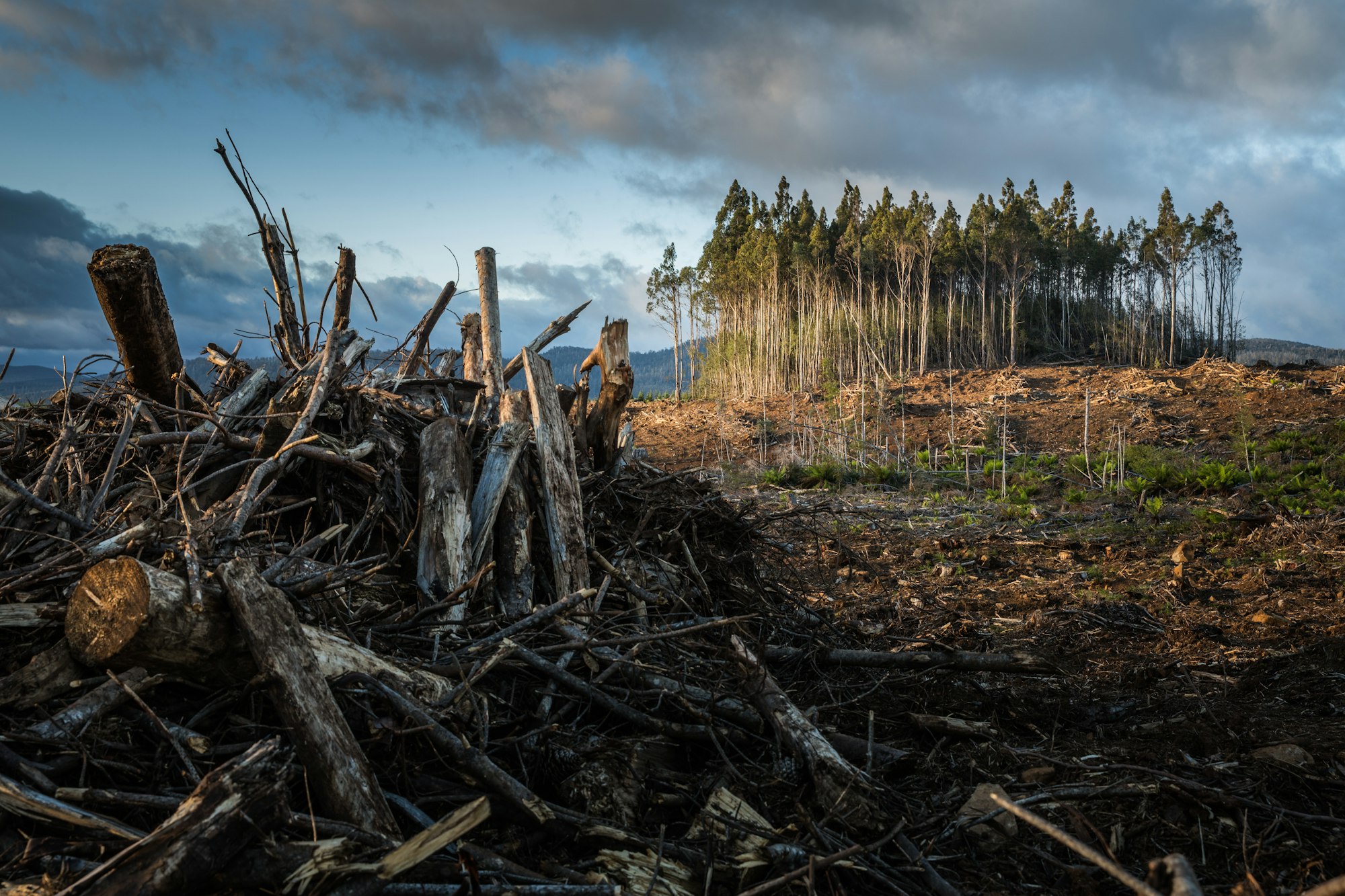
The short answer is volume and difficulty: how much material comes off the site and how hard it is to get it there. Clearing is everything above grade, meaning trees, brush, stumps and debris. Grading is everything after that, cutting high spots, filling low ones and shaping the ground so water runs where it should and the building pad sits flat and solid.
Most people picture clearing as the expensive part. On a lot of sites around Zelienople, Cranberry and the Route 8 corridor, the grading is the bigger line item, because the ground is rarely flat and the soil is rarely cooperative. The two jobs feed each other, though. How you clear affects how you grade, and the grading plan tells you how much you need to clear in the first place.
Trees, brush and how much has to come out
Tree count and tree size matter more than acreage. An acre of overgrown field with scrub and saplings clears very differently from an acre of mature hardwoods. Big trees take longer to drop safely, need larger equipment to handle, and leave more wood and bigger stumps to deal with.
Selective clearing versus full clearing
Full clearing means everything inside the limit of disturbance comes out. Selective clearing means we keep certain trees, usually along property lines, near a future driveway, or around where the house will sit. Selective clearing costs more per square foot of ground cleared because the operator has to work around what stays, protect root zones, and often drop trees in a specific direction. It costs less overall when it means less total ground disturbed. Most homeowners who buy wooded land in Butler County want to keep as many trees as they can, so we talk through that early and flag the trees on site.
Timber value
On larger wooded parcels, some owners ask whether the timber is worth anything. Sometimes it is, if there is enough marketable hardwood and a logger can get to it. That is a conversation to have with a forester before clearing starts, not after. On most residential and small commercial lots, the volume is too small to matter, and the wood becomes part of the debris we process or haul.
Brush and undergrowth
Thick brush, multiflora rose, grapevine and fallen timber slow everything down. A forestry mulcher can turn brush and small trees into mulch on site, which cuts hauling. Mulching is not the answer everywhere, because a thick layer of wood chips left in a future building or driveway area has to be stripped off later anyway.
Stumps and roots
Stumps are one of the most underestimated parts of a clearing job. Every stump inside a building pad, driveway or parking area has to come out completely, roots and all, because buried wood rots and leaves a soft spot under whatever you build on top of it.
There are two ways to handle them. We can pull stumps with an excavator, which leaves a hole that has to be backfilled and compacted, and a root ball full of soil that has to be dealt with. Or we can grind them in place, which works well in lawn areas but not under foundations, where we want the whole root mass gone. Grinding stumps in a future yard and pulling them in the building footprint is a common split.
Pulled stumps are heavy and bulky. They fill trucks quickly, and they cost money to dispose of. That is why the stump count on your lot is one of the first things I write down on a site visit.
Slope, soil and how much dirt moves
Slope is the single biggest driver on the grading side. A flat lot might need light stripping and fine grading. A hillside lot north of Pittsburgh might need thousands of yards of cut and fill to create a level pad, a driveway that a truck can climb, and swales to carry water around the house.
Balancing cut and fill
The cheapest dirt is dirt that never leaves the site. A good grading plan tries to balance the cut, meaning soil removed from high areas, with the fill, meaning soil placed in low areas. When the numbers balance, you pay to move dirt across the lot. When they do not, you pay to haul extra soil away or to truck fill in, and both of those add trucking and tipping costs fast.
Clay over shale
Most of Butler, Allegheny and Beaver Counties sit on clay over shale. Clay is slow to dry, sticky to work, and hard to compact when it is wet. Shale can show up a few feet down and needs a hammer or a ripper on the excavator rather than a bucket. Neither one is a reason not to build, but both affect how long the work takes. If the fill area needs structural compaction, clay may need to dry out, or we may need to bring in better material for the critical areas.
Topsoil
Topsoil gets stripped first and stockpiled, because you will want it back for the lawn and landscaping at the end. On some lots there is plenty. On others there is very little, and the owner has to decide whether to buy topsoil later. Stockpiles also need erosion protection while they sit.
Haul-off and disposal
Anything that does not stay on site has to go somewhere, and every truckload has a cost. Haul-off covers logs, brush, stumps, rock, construction debris from old structures, and any excess soil.
Three things drive haul-off cost. The first is volume, meaning how many loads. The second is distance, meaning how far the trucks travel to a place that will accept the material. The third is the material itself, since clean soil, wood waste and mixed debris all go to different places and carry different fees. A lot that balances its dirt and mulches its brush on site can cut hauling to almost nothing. A lot with an old barn, a pile of buried trash and more soil than it can use can turn hauling into the biggest line on the bid.
Burn rules in Butler and Allegheny Counties
Burning brush on site used to be the cheap way to get rid of clearing debris. Today it depends entirely on where the lot is. Many townships restrict or ban open burning, some require a permit from the fire department, and PA DEP rules limit burning of clearing waste. Allegheny County has its own open burning rules that are stricter than most of the surrounding area.
Even where burning is allowed, it takes dry weather, attention, and good judgment about neighbors. In growing areas like Cranberry, Jackson and Adams Townships, close neighbors make it less practical. We check the township rules for every job and plan to mulch or haul when burning is not allowed or not a good idea. Please confirm the current rules with your township before you assume you can burn.
Erosion and sediment control requirements
Any earth disturbance in Pennsylvania has to use erosion and sediment controls, and larger jobs need written plans and permits. Those requirements are part of the cost of clearing and grading, not an add-on.
Under Pennsylvania's Chapter 102 rules, a written erosion and sediment control plan is required when earth disturbance reaches 5,000 square feet or more. When disturbance reaches one acre or more, an NPDES permit for stormwater discharges from construction activity is typically required as well. In Butler County, the Butler County Conservation District handles much of this review on behalf of PA DEP. Your township may also require its own grading permit and may apply a stormwater ordinance written under Act 167, the state stormwater management law.
On the ground, that means silt fence or compost filter sock along the downhill side of the work, a rock construction entrance so trucks do not track mud onto the road, inlet protection, stabilized stockpiles, and seeding and mulching or matting as areas reach final grade. Those items cost money to install and money to maintain after every heavy rain. The bigger the disturbed area and the steeper the slope, the more controls the site needs.
One practical way to keep cost down is to disturb only what you need. A tight limit of disturbance means less clearing, less grading, fewer controls and sometimes a lower permit threshold. That is a design decision worth making before the plan goes to the township.
Access, utilities and site conditions
How easily equipment can get in and work affects every other number. A lot with road frontage and a clear path for a lowboy trailer is simple. A lot at the end of a narrow lane, behind another property or up a steep grade may need a temporary access road built first.
Before any digging, we call PA One Call, the 811 system, at least three business days ahead so utility owners can mark their lines. On rural lots in northern Butler County there may be very little marked. In developed areas along the Route 19 and Route 228 corridors there can be gas, water, sewer, fiber and electric lines near the work, and working around them takes care and time. Overhead lines near trees add more care during felling.
Wet areas, springs and soft spots also matter. If there is a stream or wetland on or near the lot, work near it may need separate state approval, and that has to be sorted out before clearing. We would rather find that in the planning stage than with a machine already on site.
From the field: what I check on every lot
When I walk a lot for a clearing and grading estimate, the first thing I look at is where the water goes. Clay ground in Western PA tells you a lot if you look at it after a rain. Standing water, rutted paths and moss-covered low spots tell me where drainage will need work and where fill will be hard to compact.
Then I look at trees and stumps inside the footprint, the slope from the road to the pad, and whether the cut and fill will balance. I ask the owner what they want to keep and what they plan to build, because a house, a pole barn and a commercial pad all need different grading. By the time I leave, I know whether the bid will be driven by clearing, by grading or by hauling, and I can tell the owner that directly. That is the same walk I, John Minarik, do on every lot before I put a number on it.
How to get an accurate clearing and grading estimate
The fastest way to an accurate number is to give the contractor the right information before the site visit. Here is what helps me most.
A survey or plot plan showing property lines and the area you want cleared.
A site plan or sketch showing where the house, building, driveway and parking will go.
Any engineered grading plan or erosion and sediment control plan, if one exists.
Photos of the lot, especially in wet weather.
A list of trees or areas you want to keep.
Anything you know about buried debris, old foundations, wells or septic systems on the property.
With that, we can give you a free, itemized estimate after seeing the lot, with clearing, grading, hauling and erosion controls broken out separately. You will see what each part costs and why. Our excavation and site work crew handles the whole sequence, from clearing and stump removal through rough and fine grading, so you are not coordinating three different outfits.
Frequently asked questions
What affects land clearing and grading cost in Western PA the most?
Slope and the amount of dirt that has to move usually affect the price most, followed by tree size and density, stump removal, and how much material has to be hauled off site. Erosion and sediment controls and the permits required for the size of the disturbance also add to the cost. BCU gives you a free, itemized estimate after seeing the lot.
Do I need a permit to clear land in Butler County?
It depends on how much ground you disturb and on your township. Any earth disturbance must use erosion controls, a written E&S plan is required at 5,000 square feet of disturbance, and an NPDES permit is typically required at one acre. Many townships also have grading or stormwater permits. Confirm the specifics with your township and the Butler County Conservation District.
Can I burn the brush and trees from my lot?
Maybe, but do not assume it. Burning rules vary by township, PA DEP limits burning of clearing waste, and Allegheny County has stricter rules of its own. Where burning is not allowed or not practical, debris is mulched on site or hauled away, and that choice changes the cost.
Is it cheaper to grind stumps or pull them?
Grinding is usually simpler in lawn and landscape areas. Under a foundation, driveway or parking area, stumps and roots should be pulled completely so nothing rots under the structure. Most lots use a mix of both.
How long does clearing and grading take?
It depends on the site and scope, including the size of the area, tree cover, slope, soil moisture and permit timing. BCU gives you a realistic schedule with your estimate, and we plan the work around wet seasons when clay ground is hardest to grade and compact.
Get a straight answer on your lot
Building Contractors United is a woman-owned general contractor based at 64 Halstead Blvd in Zelienople. We self-perform excavation and site work across Butler County, Zelienople and the area within about an hour of our shop, from greater Pittsburgh north to Grove City. We are fully insured with general liability and workers' compensation, registered as PA HIC #PA193140, and we back our work with a 2-year workmanship warranty. If you want our team to walk your property and explain land clearing and grading cost in Western PA for your specific lot, call (724) 900-4123, Monday to Friday from 7 AM to 5 PM, or request a free estimate.