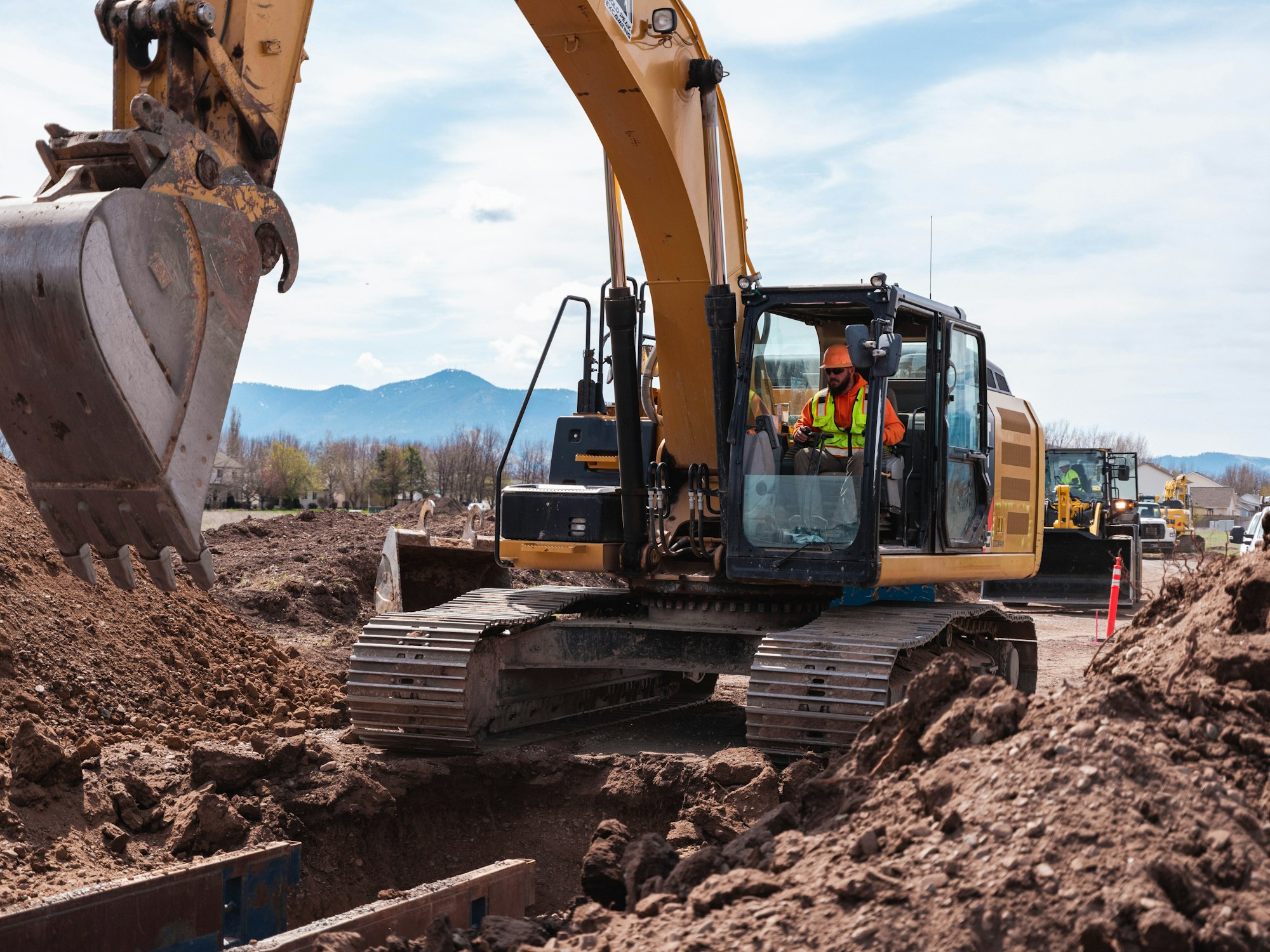

General contractor vs construction manager comes down to who carries the risk of building your project and when that team joins it. A general contractor usually prices a finished design and commits to delivering it for that price, carrying the risk of its own subcontractors and costs. A construction manager usually joins earlier, often during design, and either advises the owner for a fee or takes on the construction risk under a guaranteed maximum price. Both can build a good building. The right choice depends on your project's size, how complete the design is, how much involvement you want, and how much risk you want to hold.
I am Olivia Minarik, and I founded Building Contractors United in 2024. Owners in Pittsburgh ask me this question often, partly because our own team uses both terms. BCU is a general contractor, and my husband, John "JT" Minarik, is our Construction Manager. That is a job title inside our company, not a separate delivery method, and I will explain the difference below so the labels stop getting in the way of a good decision.
What a general contractor does
A general contractor is the company that signs one contract with the owner to build the project and is responsible for everything inside that contract. The GC hires and manages subcontractors, buys materials, schedules the work, runs the site, handles safety, coordinates inspections and delivers the finished building.
In the traditional design-bid-build approach, the owner hires an architect and engineers first. The design team produces complete drawings and specifications. General contractors then bid on those documents, and the owner usually picks the best value, which is often the lowest qualified bid. The GC signs a lump-sum or stipulated-sum contract and is responsible for building what is drawn for that price.
Where the risk sits with a GC
With a lump-sum GC contract, the contractor carries the cost risk for the work shown in the documents. If its subcontractors come in high or its crews take longer than planned, that is the GC's problem. The owner carries the risk of the design itself. If the drawings are incomplete or something unforeseen appears, such as rock where none was expected or a hidden condition in an existing building, the owner pays through a change order.
How a GC gets paid
A general contractor's overhead and profit are built into the lump sum. The owner sees one price, and the line items behind it are usually not fully open to the owner. Some owners prefer that simplicity. Others want more visibility, which is one reason construction management exists.
What a construction manager does
A construction manager is hired to manage the construction process on the owner's behalf, usually starting during design. There are two common forms, and the difference between them matters more than the title.
Construction manager as agent
In the agency model, the construction manager is an advisor. The CM helps with budgets, schedules, constructability reviews and bidding, and then oversees the trade contractors. The trade contracts are often held directly by the owner. The CM is paid a fee for services and does not guarantee the cost of the work. The owner keeps most of the financial risk, but also gets an experienced advocate in the room.
Construction manager at risk
In the at-risk model, often called CMAR, the construction manager joins during design, helps shape the budget, and then commits to a guaranteed maximum price, or GMP, once the design is far enough along. The CM holds the trade contracts and takes on cost risk above the GMP, subject to the contract terms. Costs are usually open book, and savings below the GMP may be shared or returned depending on the agreement. The CM is paid a fee, often a percentage of the cost of work, plus general conditions.
General contractor vs construction manager: the key differences
The key differences between a general contractor and a construction manager are timing, risk, transparency and how the fee is structured. Here is how they compare in practice.
When they join. A GC under design-bid-build joins after the design is complete. A CM joins during design, sometimes before the architect has a full concept.
Who holds the trade contracts. A GC holds them. An at-risk CM holds them. An agency CM often leaves them with the owner.
Price certainty. A GC gives a lump sum on complete drawings. An at-risk CM gives a GMP once the design is developed enough. An agency CM gives estimates, not a guarantee.
Transparency. A lump-sum GC contract is usually closed book. CM contracts are usually open book.
Fee. A GC's overhead and profit are inside the price. A CM's fee is usually stated separately.
Owner involvement. Construction management typically asks more of the owner, with more meetings, more decisions and more review of costs.
When a general contractor makes more sense
A general contractor makes more sense when the design is complete, the scope is clear and you want one firm price and one point of responsibility. That describes most small and mid-sized commercial projects we see in Allegheny, Butler and Beaver Counties.
Projects that fit the GC model
Interior commercial renovations, tenant build-outs, small retail and office buildings, warehouses and flex buildings, and site work packages usually fit well. The scope is defined, the trades are familiar, and a lump-sum price gives the owner and the lender a clear number.
Owners who fit the GC model
Owners who run a business and do not want to manage a construction project often prefer a GC. You make design decisions, approve the price, and then let the contractor carry the day-to-day work. You still get updates and walkthroughs, but you are not reviewing every subcontract.
When a construction manager makes more sense
A construction manager makes more sense on large, complex or fast-moving projects where builder input during design pays for itself. Hospitals, schools, large mixed-use buildings and projects that must start construction before design is finished often use CM at risk.
Public owners in Pennsylvania have their own procurement rules, and those rules shape which delivery methods they can use. If you represent a public entity, your solicitor and procurement office will set those limits, and they are outside the scope of this article.
For private owners, CM delivery works best when you have an internal team or an owner's representative who can keep up with the open-book process. Without that, the transparency of construction management can turn into a pile of documents nobody has time to review.
Where design-build fits in
Design-build is a third option that combines design and construction under one contract, and for many private commercial owners it captures the best parts of both models. The design-build team brings construction knowledge into the design from day one, the way a CM would, and delivers one contract and one point of responsibility, the way a GC would.
Our design-build process works this way. We develop the design with the owner and our design partners, price it as it develops, and adjust the design to hit the budget before the drawings are final. That avoids the common design-bid-build problem of finishing a full set of drawings, sending them out to bid, and discovering the project costs more than anyone expected. Our work on a modern steel-and-stone custom home, which we helped design and then built from the ground up, used that same collaboration between design and construction.
What "Construction Manager" means at BCU
At BCU, Construction Manager is JT's role inside our general contracting company, not a separate delivery method. When you hire BCU, you sign one contract with a general contractor. JT is the person who walks your site, plans the sequence of work, runs our crews and subcontractors, and makes sure the building matches the drawings. He has been in the field since 2009, and he is on our job sites, not behind a desk.
That arrangement gives owners some of what they want from a construction manager, which is an experienced builder looking out for the project from the start, inside the simplicity of a GC contract. JT reviews drawings for constructability, flags site issues before they become change orders, and keeps the schedule honest. I lead business planning and development, and JT handles estimates, contracts and change orders, so you always know who to call.
How fees and pricing compare
Fees and pricing differ more in structure than in the total, and the total depends on the site and the scope. A GC's markup is inside a lump sum. A CM's fee is visible as a separate line. Neither is automatically cheaper. What usually changes the final cost most is how complete the design is when the price is set, how many changes the owner makes during construction, and what the site turns out to hide.
If you want a clear number, give any contractor the most complete information you can, including drawings, a survey, any geotechnical report and your target schedule. BCU gives you a free, itemized estimate after seeing the project, and we explain what is included and what is not, so you can compare our number fairly against anyone else's.
Questions to ask before you choose
The best way to choose between a general contractor and a construction manager is to ask a few direct questions about your own project.
How complete is your design? If you have full drawings, a GC bid is straightforward. If you have a concept and a budget, a CM or a design-build team can help shape the design.
How much risk do you want to carry? A lump sum moves most cost risk to the contractor. An agency CM leaves it with you.
How much time can you give the project? Open-book CM delivery needs an engaged owner. A GC contract needs less.
Who will actually be on your site? Ask every firm who runs the field work day to day and how long they have done it. A title on a proposal matters less than the person standing in your building.
Frequently asked questions
Is a construction manager the same as a general contractor?
No. A general contractor contracts to build a defined project, usually for a set price. A construction manager is hired to manage construction on the owner's behalf, often starting during design, either as a paid advisor or at risk under a guaranteed maximum price. The confusion comes partly from job titles, since many general contractors, including BCU, have a team member with the title Construction Manager.
Which is cheaper, a general contractor or a construction manager?
Neither delivery method is automatically cheaper. The final cost depends on the site, the scope, how complete the design is, and how many changes happen during construction. Early builder input from a CM or a design-build team can lower cost by catching expensive design choices early, while a lump-sum GC bid gives price certainty on a finished design.
What is a guaranteed maximum price?
A guaranteed maximum price, or GMP, is a ceiling on the cost of the work that a construction manager at risk commits to once the design is developed. Costs above the GMP are generally the contractor's responsibility, subject to the contract terms and approved changes. Savings below it are handled however the contract specifies.
Can a general contractor help during design?
Yes. Many general contractors, including BCU, provide pricing and constructability input during design, especially on design-build projects. Bringing a builder in early is one of the simplest ways to keep a design within budget.
Does BCU work as a general contractor or a construction manager?
BCU works as a general contractor and also offers design-build. John Minarik holds the title of Construction Manager within our company and leads the work in the field on every project.
Talk through your project with us
Building Contractors United is a woman-owned general contractor based in Zelienople, and commercial construction is at the center of our work. We serve Pittsburgh and communities across Butler, Allegheny and Beaver Counties, from Venetia north to Grove City. We are fully insured, registered as PA HIC #PA193140, and we back our work with a 2-year workmanship warranty. If you are weighing general contractor vs construction manager for your next building, John Minarik and I are happy to talk it through. You can reach Building Contractors United at (724) 900-4123, or request a free estimate.